


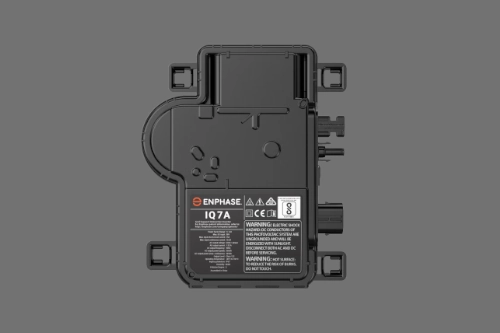
Is the UK Missing Out on the Microinverter Revolution?
When planning a solar installation, it helps to understand that there are generally three main types of inverters on the market: string inverters, hybrid inverters, and microinverters. While string and hybrid systems have long been the traditional defaults in the UK, today we want to focus entirely on the massive advantages of microinverters.
Aside from a new car, transitioning to solar energy is likely the single biggest purchase and financial investment you will make this year. When you are committing that level of hard-earned capital to your property, you deserve a system that delivers maximum returns. That is why our absolute mission is to ensure your installation is as efficient, exceptionally powerful, and completely safe as modern technology allows.
Yet, while solar adoption across the UK and Europe is sky-rocketing at a remarkable 20% compound annual growth rate (CAGR), a major global trend is being completely ignored on British soil.
Across the US, Asia, and Australia, microinverter technology is dominating the market with an annual growth surge of 18–25%. Meanwhile, the UK and broader European markets remain sluggish, with microinverters making up a mere 5–10% of new solar PV arrays.
Why the massive discrepancy? Frankly, the UK solar industry is suffering from an awareness problem. Too many domestic installation companies are stuck in a legacy mindset, defaulting to standard, rigid central “string” inverters simply because they are easier to spec out using basic satellite imagery.
At Legra Electrical & Renewables, we refuse to take shortcuts with your investment. We’ve analysed the performance data, mastered the engineering, and seen firsthand the incredible efficiency and safety advantages this technology delivers. As certified specialists for both Enphase and Atmoce, we have to ask: why is the UK lagging so far behind the global microinverter revolution?
The Installer Knowledge Gap: Why We Choose Superior Tech
While much of the UK solar industry remains stuck in the past, standardizing on rigid central inverters, our team has actively invested in mastering module-level power electronics.
- The Industry Blindspot: Many installers dismiss microinverters purely on upfront component cost, completely failing to recognise how much power is lost on British roofs due to passing clouds, complex brickwork shadows, and winter light levels.
- Our Forward-Thinking Approach: We don’t just install solar panels; we engineer long-term energy assets. We know that by treating every panel as an independent power station, we can unlock hidden generation windows that standard installers miss entirely. Where others see a premium hurdle, we see the gold standard in safety, efficiency, and lifetime reliability.
Versatile Engineering: From Domestic Roofs to Historic Landmarks
Because we fully grasp the unique characteristics of microinverters, we know they are the absolute gold standard not just for standard domestic homes, but for complex, prestigious, or strictly regulated architectural projects.
- Ideal for Churches and Buildings of Significance: Heritage buildings, listed properties, and churches present steep installation challenges. They often feature highly complex rooflines, ancient timber structures, and strict aesthetic guidelines. Because microinverters remove high-voltage DC risks and require zero massive central plant equipment inside the building envelope, they are heavily favoured by structural engineers, conservation officers, and ecclesiastical authorities.
- Preserving Architectural Integrity: With a microinverter system, there is no need to run heavy, rigid industrial DC containment paths through historical fabrics. The installation is low-profile, flexible, and perfectly adaptable to irregular, historic roof orientations.
Why Microinverters Are Replacing the Traditional “String”
To understand why the global market is shifting, look at how a system handles a rainy day, an uneven roof, or localized shading.
In a traditional setup, multiple panels are linked together like a string of Christmas tree lights connected to one central inverter. If even a single panel is partially shaded by passing clouds, growing trees, or a chimney stack, it can bottleneck the entire system.
- The Problem with String Systems: Most modern solar panels are equipped with internal bypass diodes designed to minimize these shading effects by dropping out the underperforming section of a panel. However, while bypass diodes help keep the rest of the string active, they still result in a significant loss of total power output from the affected panel. Furthermore, if the shading from a chimney or tree is severe enough, the central string inverter may struggle to track the correct voltage, dragging down the efficiency of the completely unshaded panels on the line.
- Maximum Efficiency with Microinverters: Microinverters eliminate this bottleneck entirely. By placing a small, independent inverter directly underneath each individual solar panel, the DC power is converted to AC right on the roof.
- Individual Panel Generation & Monitoring: Because every panel has its own dedicated microinverter, they operate entirely independently. Through your smartphone, you get granular, module-level tracking. If a single panel drops in output or accumulates dirt, you see it instantly on your app, making maintenance completely transparent.
- Longer Generation Windows: Because microinverters deal with smaller, localized loads, they require a much lower start-up voltage to begin operating. This means your system starts generating usable electricity earlier in the morning and continues later into the evening, maximizing your daily free energy window.
- Unrivalled Reliability: Central string inverters generally have a failure rate of about 1 in 100. Microinverters have a failure rate 16 times lower—just 0.055%.
- Built-in Redundancy: If a central string inverter fails, your entire solar system turns off until it’s replaced. If a microinverter fails on an average 8-panel (4kW) UK system, you only lose 10% of your output. The rest of your home keeps generating clean power while we replace the single unit.
AI-Powered Storage: Maximizing Your Energy Capability
Generating maximum power on the roof is only half the battle; how you store and use that power determines your true savings.
When your premium microinverter system is combined with AI-enabled smart batteries, your home energy network transforms into a fully automated, cost-slashing asset.
- Learning Your Usage Patterns: The integrated AI modelling continuously tracks and learns your household’s unique energy consumption habits, predicting exactly when you’ll need the most power.
- Smart Tariff Integration: By analysing live weather forecasts for upcoming solar generation alongside your dynamic smart electricity tariff, the AI system makes split-second decisions. It automatically charges your battery from the grid when rates are low or negative and intelligently holds your free solar power for expensive peak periods—or exports surplus energy back to the grid exactly when export payments are at their highest.
- Total Energy Optimization: This smart automation bridges the gap between peak roof generation and your actual household storage capability, ensuring no green energy is ever wasted.
Inherent Safety: Why Insurance Companies Prefer Microinverters
Safety is our absolute priority, and it’s a major priority for commercial and domestic insurers too. Traditional string systems require high-voltage DC electricity (up to 600V or more) to travel from your roof, down through your property, to a central inverter. High-voltage DC carries a risk of electrical arcing if cables are damaged, degraded, or disturbed over time.
- Extra-Low Voltage Safety: Microinverters convert DC to AC immediately on the roof, keeping high-voltage DC completely outside the home. They operate at extra-low voltages (typically under 600V limits, with systems like Atmoce running below 60V DC).
- The Insurance Advantage: Because microinverters eliminate the risk of high-voltage DC arcing and fire hazards inside the building envelope, they are highly preferred by insurance companies. Choosing a microinverter system can simplify risk assessments, offer greater peace of mind to property owners, and ensure long-term structural safety.
Future-Proofing: Effortless Expansion
One of the biggest limitations of a traditional central DC string system is that it is notoriously rigid. If you install an 8-panel system today and want to add 4 more panels next year, you often have to replace the central inverter entirely, re-string the system, or face massive compatibility issues with newer panel models.
- Seamless Scalability: Microinverters make expanding your array completely effortless. Because each panel is its own self-contained generator, you can add extra panels to your roof one by one as your budget allows or your energy needs grow. No need to replace central components, no balancing strings—just add a panel, plug in a microinverter, and your system grows seamlessly.
The Financial Reality: Balancing Premium Cost Against Lifetime Value
We believe in complete transparency with our customers. When comparing quotes, it is important to understand that microinverter technology does carry a higher upfront premium cost than a traditional string inverter setup.
Because you are investing in individual, high-tech components for every single panel rather than one central box, the initial hardware expenditure is higher.
- The Impact on Payback Periods: Because of the higher initial investment, a microinverter system will generally extend your initial financial payback period by a couple of years compared to a budget string installation.
- The 25-Year Warranty Protection: While the upfront cost is higher, microinverters are built to protect that investment for decades. A traditional string inverter typically only comes with a 5-to-10-year warranty, meaning you will almost certainly have to pay out-of-pocket to replace it at least once—if not twice—over the lifespan of your panels. In contrast, both Enphase and Atmoce offer incredible 25-year manufacturer warranties.
- True Long-Term Value: When you look at the total cost of ownership over 25 years, microinverters often prove more economical. You eliminate the cost of mid-life central inverter replacements, protect yourself against complete system down-time, and consistently generate more electricity day-to-day. It is a premium product designed for those who value maximum safety, reliability, and lifetime performance.
Proven in the Field: Real-World Case Studies
Don’t just take our word for it. Here is how Legra Electrical & Renewables deploys these premium systems to deliver safety, reliability, and massive financial returns for our clients.
Case Study 1: Ecclesiastical Engineering at St Cedd’s Church, Southend
- The Brief: As a landmark building of civic and spiritual significance serving the local community, St Cedd’s Church required an energy solution that respected its structural heritage while providing long-term sustainability. The church council came to us with a strict checklist: the system had to be inherently safe to protect the historic building fabric, highly efficient to lower operational costs, and fully scalable so they could expand their array in future phases as funding allowed.
- The Solution: Enphase microinverter technology ticked every single box. By converting DC to safe household AC right on the roof, we kept dangerous high-voltage DC out of the ancient building envelope entirely, satisfying ecclesiastical insurers. Because churches have complex rooflines with localized shading challenges, Enphase’s panel-level independence ensures maximum generation. Most importantly, it allows the church to easily add more panels in the future without replacing central hardware.
- The Result: A safely installed, low-profile, future-proofed clean energy system that protects the structural integrity of the church while slashing their daily running costs.
Case Study 2: High-Yield Atmoce Residential Solar in South London
- The Brief: Our domestic client in South London was facing soaring monthly electricity bills and wanted a heavy-duty residential array to achieve maximum energy independence. The property featured a large roof space capable of holding a substantial 15-panel array, but the roof had multiple aspects and varying sun exposures throughout the day, meaning a standard string system would suffer severe efficiency drop-offs.
- The Solution: We designed and engineered a high-density system utilizing cutting-edge Atmoce MI-Series technology, matching each individual solar module with its own dedicated microinverter in a 1-to-1 configuration. This ensured that shading, grime, or passing clouds over a single panel have zero effect on the output of the other fourteen. The system was paired with Atmoce’s low-voltage battery storage, allowing the client to automatically store their massive day-time generation and deploy it during expensive evening grid peaks.
- The Result: The client is already making large-scale savings on his electric bill. Because the Atmoce system operates on a lower start-up voltage, it wakes up earlier and goes to sleep later than traditional setups. Through his home management app, he can watch all 15 individual panels generating free, clean energy in real-time, safeguarding his home against energy price volatility for the next 25 years.
Enphase vs. Atmoce: Choosing the Right System
As certified premium installers for both global market leaders, we offer tailored designs using both Enphase and Atmoce technologies. While both offer industry-leading 25-year warranties and exceptional build quality, they have distinct technical advantages depending on your project:
|
Feature |
Enphase Energy |
Atmoce Technology |
|
Industry Footprint |
The long-established global pioneer of microinverter technology with millions of units installed worldwide. |
The cutting-edge European innovator (based in Amsterdam) focused on high-power density. |
|
System Architecture |
Standard 1-to-1 microinverters (one unit per solar panel) providing independent module-level optimization. |
Renowned for their 2-in-1 MI-Series architecture, allowing two high-output solar modules to connect to a single dual-tracking device, which significantly reduces upfront equipment and hardware costs. |
|
Efficiency & Power |
Exceptional real-world low-light performance and a robust, globally proven smart grid ecosystem. |
Record-shattering 98.2% peak efficiency with high power handling capabilities per unit. |
|
Battery Integration |
Integrates seamlessly with the Enphase IQ Battery ecosystem for full smart-home backup. |
Pairs with their M-ELV Extra-Low Voltage battery bank, operating safely below 30V DC to eliminate high-voltage battery risks. |
The Legra Difference: No “Desktop” Guesswork
Transitioning to solar is a significant investment, and we believe it should be handled with precision. While many national companies rely purely on satellite imagery and “desktop surveys” to guess your quote, Legra Electrical & Renewables always visits your property in person.
- No Hidden Surprises: We inspect your roof structure, evaluate physical shading hazards, and check your existing electrical setup firsthand.
- In-House Loft Survey: Where practicable, we conduct a visual check inside your loft to map out structural stability and the safest, neatest cable routes.
- Compliant Siting: We sit down with you face-to-face to plan exactly where your battery, combiner, and safety gear will go, ensuring everything is installed strictly in line with current regulations.
- Total Peace of Mind: We answer your technical questions on-site, giving you a locked-in, certain quote—not a loose estimate.
Ready to Future-Proof Your Property?
Don’t settle for outdated “all-or-nothing” string systems installed by companies that don’t recognize the benefits. Benefit from the safety, redundancy, scalability, and maximum power generation that the rest of the world is already enjoying.
Secure your energy independence with a premium microinverter system designed by experts who actually know the technology.
Contact the Legra Electrical & Renewables team today for an expert, on-site survey:
Phone: 01702421280
Email: info@legraelectrical.co.uk